

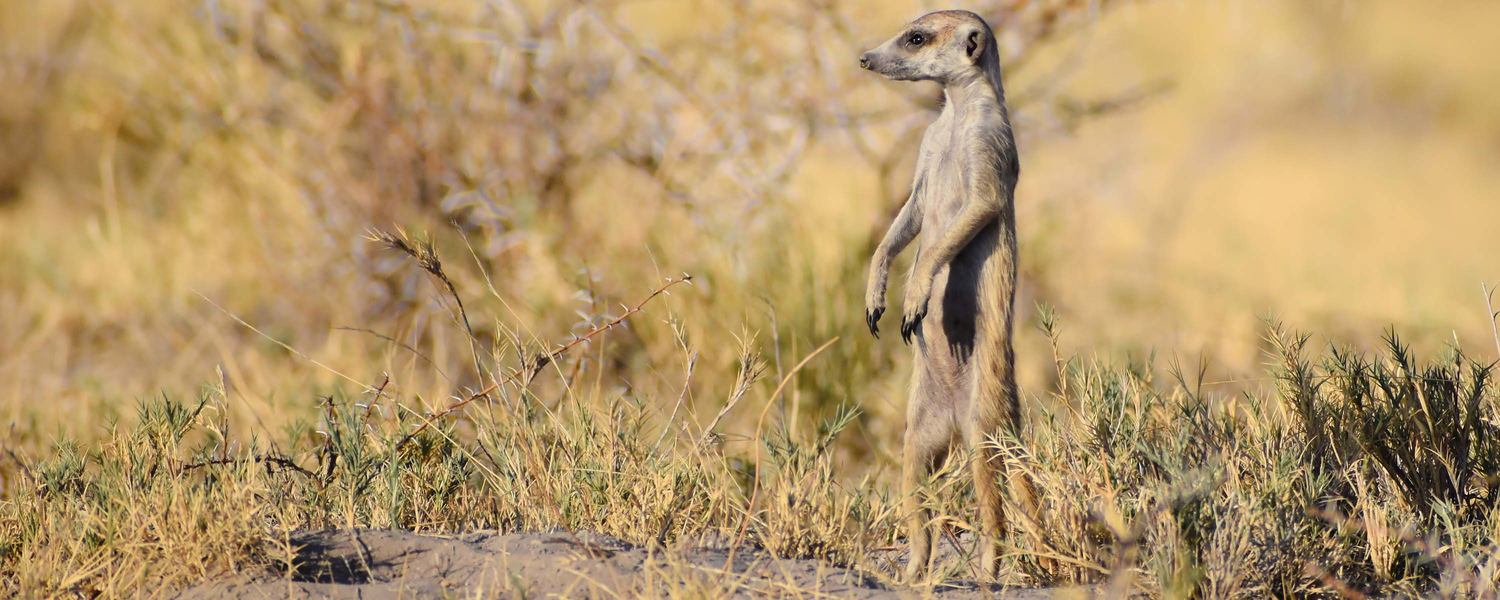
About salty water, hidden paths – and the wildlife that shows us the way.
04 | The Great Thirst
Posted on Wed September 30, 2026.
Why the Kalahari is not a desert
The Kalahari is often referred to as a desert, but because of the rainfall it receives every year, it is in fact a semi-arid savannah ecosystem. It is most commonly associated with Namibia, South Africa and Botswana. However, the Kalahari Basin stretches across six countries: Angola, Botswana, Namibia, South Africa, Zambia and Zimbabwe.
A name that tells the truth
The word ‘Kalahari’ is generally derived from the Tswana words ‘Kgala’, meaning ‘the great thirst’, and ‘Kgalagadi’, meaning ‘a place without water’. It is an honest name for a land where there is hardly any water on the surface, but it reveals little about how much life is at home here. The Kalahari is a vast, gently undulating sandy plain lying more than 900 metres above sea level. Every now and then, low rocky hills, long fossilised dunes and flat pans break up the horizon. More rain falls in the north-east than in the south-west, which is why forests and grass grow there, whilst further south there are only barren dunes.
Ancient water
The Kalahari was not always so dry. Over millions of years, the climate alternated between wetter and drier phases, and the riverbeds that now lie empty in the sand date back to the wetter periods. The most significant feature of these wet periods was Lake Makgadikgadi, which held water until around 10,000 years ago and, at its greatest extent, rivalled Lake Victoria in size. Rivers such as the Okavango, the Chobe and the upper Zambezi once flowed south-east towards the Limpopo. Movements deep within the Earth’s crust cut off this route, and the water instead collected in the basin. When the lake finally dried up, the Makgadikgadi Pans remained – those salt flats that turn green every year during the rainy season when the zebras arrive.
The People of the Kalahari
The San have lived in the Kalahari for tens of thousands of years, and no one knows this land better than they do. Bantu-speaking peoples arrived much later. The Kgalagadi, whose name means ‘people of the Kalahari’, migrated north and west; the Tswana spread out from the Limpopo Basin at the end of the 18th century; and Herero refugees sought shelter in the western and northern Kalahari at the beginning of the 20th century. In 1849, David Livingstone and William Oswell became the first Europeans to cross the Kalahari, and they were followed by missionaries, traders and ivory hunters.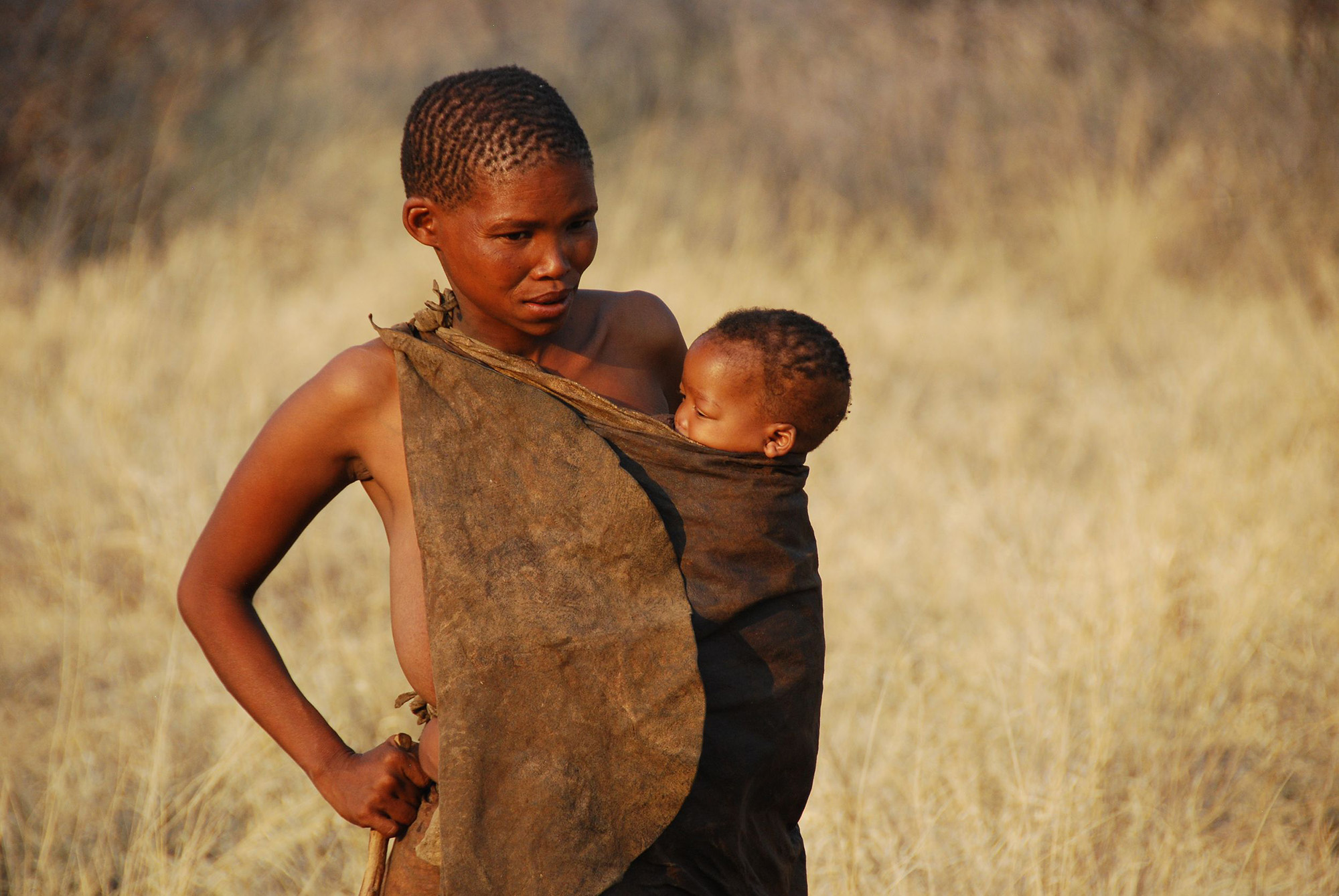
Trees that hold the land together
The northern Kalahari is much greener than its name suggests. Mopane forests, thornbush, palm trees and stands of baobabs grow here, and in the wetter north, the trees form proper dry forests. The grasses remain pale and brittle during the dry months but turn green within a few days as soon as the first rain falls.
The baobab lives up to its reputation. It stores water in its trunk, stands bare during the dry season and can live for many centuries. Some baobabs in the Makgadikgadi region have become landmarks in a country that has few points of reference. The Baines’ Baobabs were painted in 1862, and Chapman’s Baobab, with a circumference of 25 metres, once served as a guidepost for travellers.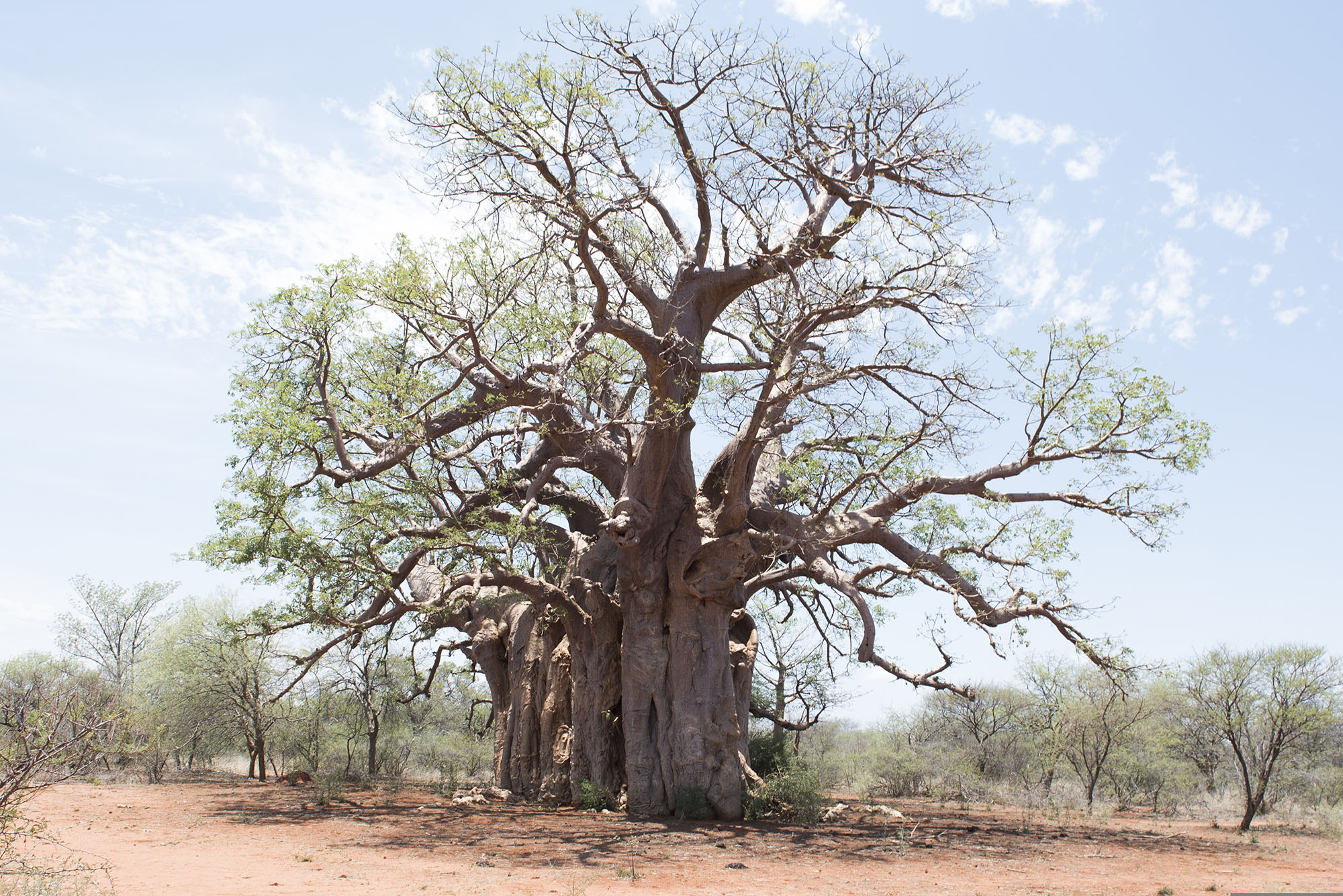
Animals that have come to terms with the arid conditions
The animals of the Kalahari have adapted to this landscape in remarkable ways. The oryx, also known as the gemsbok, can withstand a body temperature of up to 45 degrees because a heat exchanger in its nose cools the blood flowing to the brain. Kalahari lions are known for their darker, fuller manes compared to their East African relatives. Brown hyenas and cheetahs hunt on the same plains, and after the rains, elephants, buffalo and huge herds of zebras follow the fresh grass.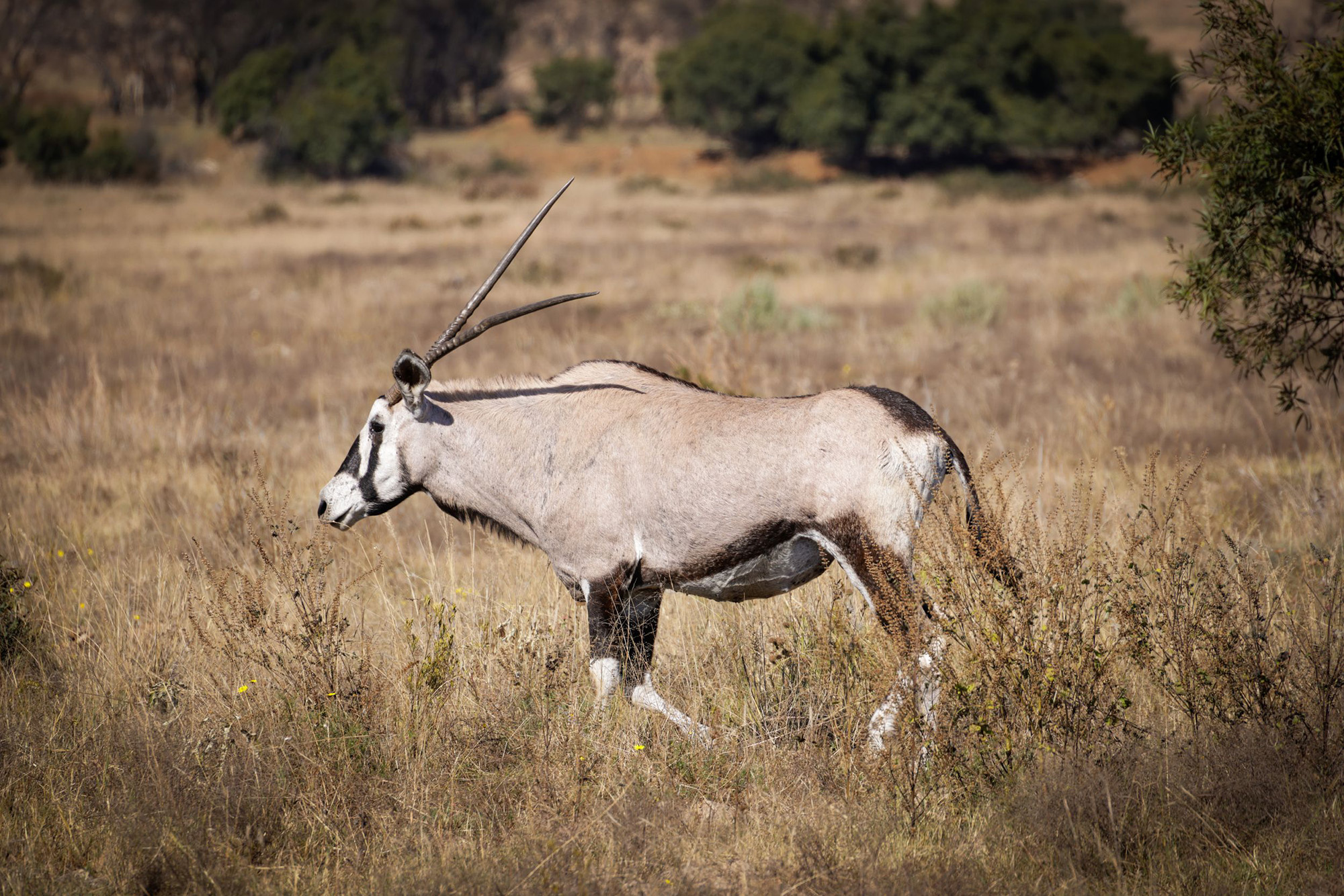
And Kwatale Collection?
Kwatale Collection is situated in this region, around a two-hour drive from Maun, in the Greater Moremi area. It is a dryland camp rather than a delta camp, and that is precisely what makes it special. Endless mopane woodland stretches to the horizon, ancient baobabs tower above it, and a waterhole in front of the camp attracts whatever is thirsty at the time. During the dry months, the days are warm, the nights cool, and the landscape lies bright and dusty. After the rain, it turns emerald green, the birds are at their loudest, and young animals appear everywhere. The Kalahari is a land of contrasts, and at Kwatale Collection you’ll experience most of them in a single year.
Experience the fascinating wilderness of the Kalahari for yourself and visit Kwatale Collection.
Further Reading
03 | What the land tells us
Fri September 4, 2026
Read This Article
02 | What we plan to do with this land
Wed July 29, 2026
Read This Article
About the history of NG43 – and the path we have chosen to take.
01 | No roads, no water – and yet the right place
Thu July 16, 2026
Read This Article
Our first few months in the wilderness: just how vast and wild it really is, how we crossed it without a single road, and how the search for water determined everything.
Share This Post