

Why the Kalahari is not a desert
05 | When the Zebras Come
Posted on Thu October 15, 2026.
A natural spectacle between the Okavango Delta and the Makgadikgadi Pans
Every year, thousands of zebras travel back and forth between the Okavango Delta and the Makgadikgadi Pans. Their route leads right through our concession. There is no timetable, only the rain tells them when it is time to set off.
A route older than any road
In the dry season the zebras stay in the Okavango Delta, where the water never quite disappears. In November or December the first rain falls in the south, and around 15,000 animals set off for the Makgadikgadi Pans. These salt pans lie empty and scorched for most of the year. With the rain, they turn into an endless green pasture within a few weeks.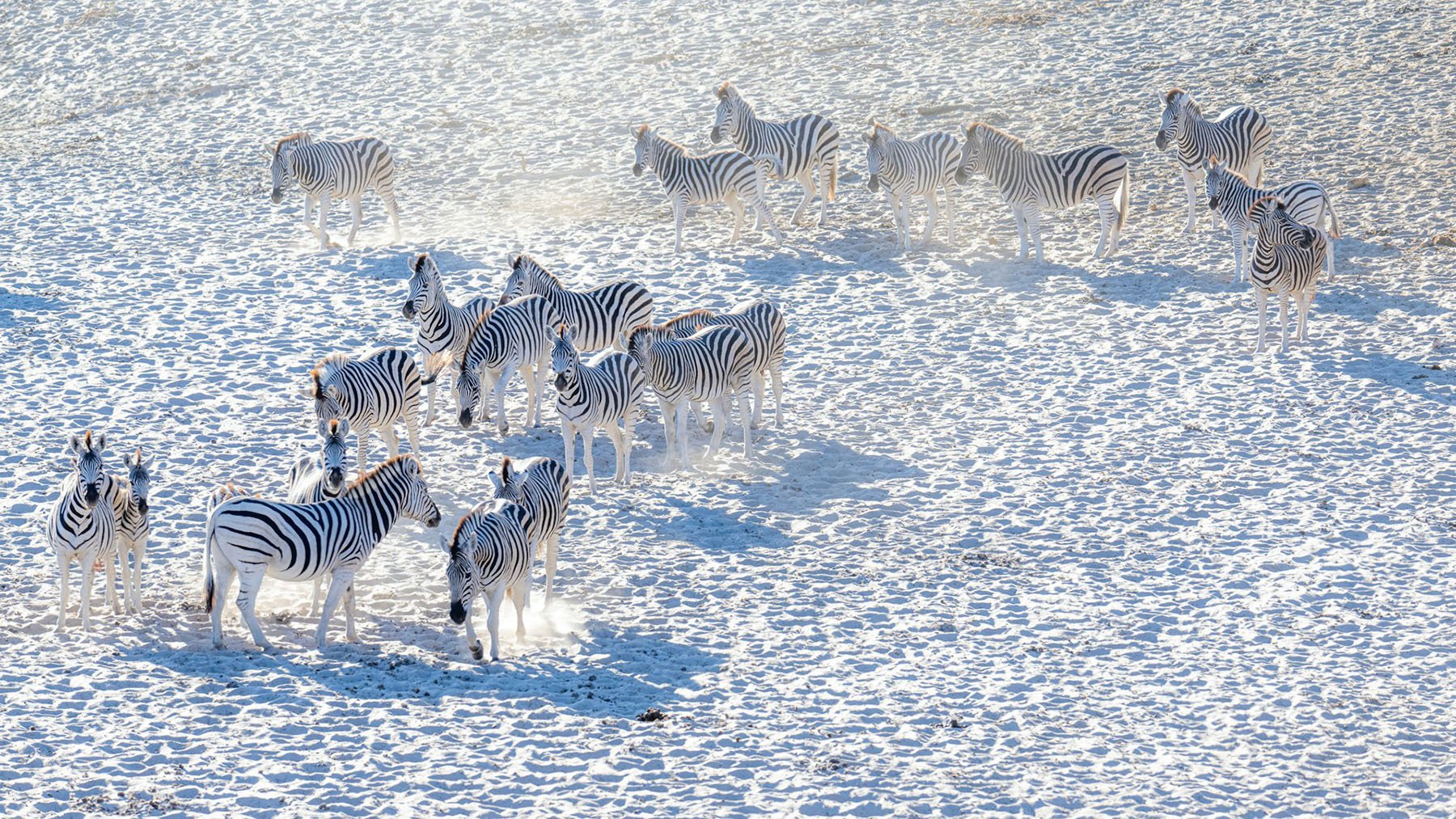
The herds take several weeks to get there. The whole round trip measures about 500 kilometres, and they walk it year after year along the same routes as their ancestors. They stay for three months in the fresh grass. In March they gather on the western edge of the pans and head back, past Maun, into the Delta and on to Moremi.
Not all of them go. Only about 55 per cent of the zebras make the journey, while the rest stay in the Delta all year round. Why some set off and others do not, nobody knows for certain.
Two migrations, one country
Botswana has a second great zebra migration, and it is the longer of the two. More than 20,000 animals spend the dry months from June to November on the Chobe floodplains. In December the rains begin in Nxai Pan, and the herds move south. Some walk almost in a straight line and arrive after two to three weeks. Others take detours and join them later.
They stay in Nxai Pan for about three months. Then in March the return journey begins, a wide arc that lasts until May. Some zebras cover more than 800 kilometres on the way. For a long time, nobody knew how far their journeys really reached. Only in 2012 did tracking collars show that the animals travel more than 1,000 kilometres every year, through regions that hardly anyone ever visits.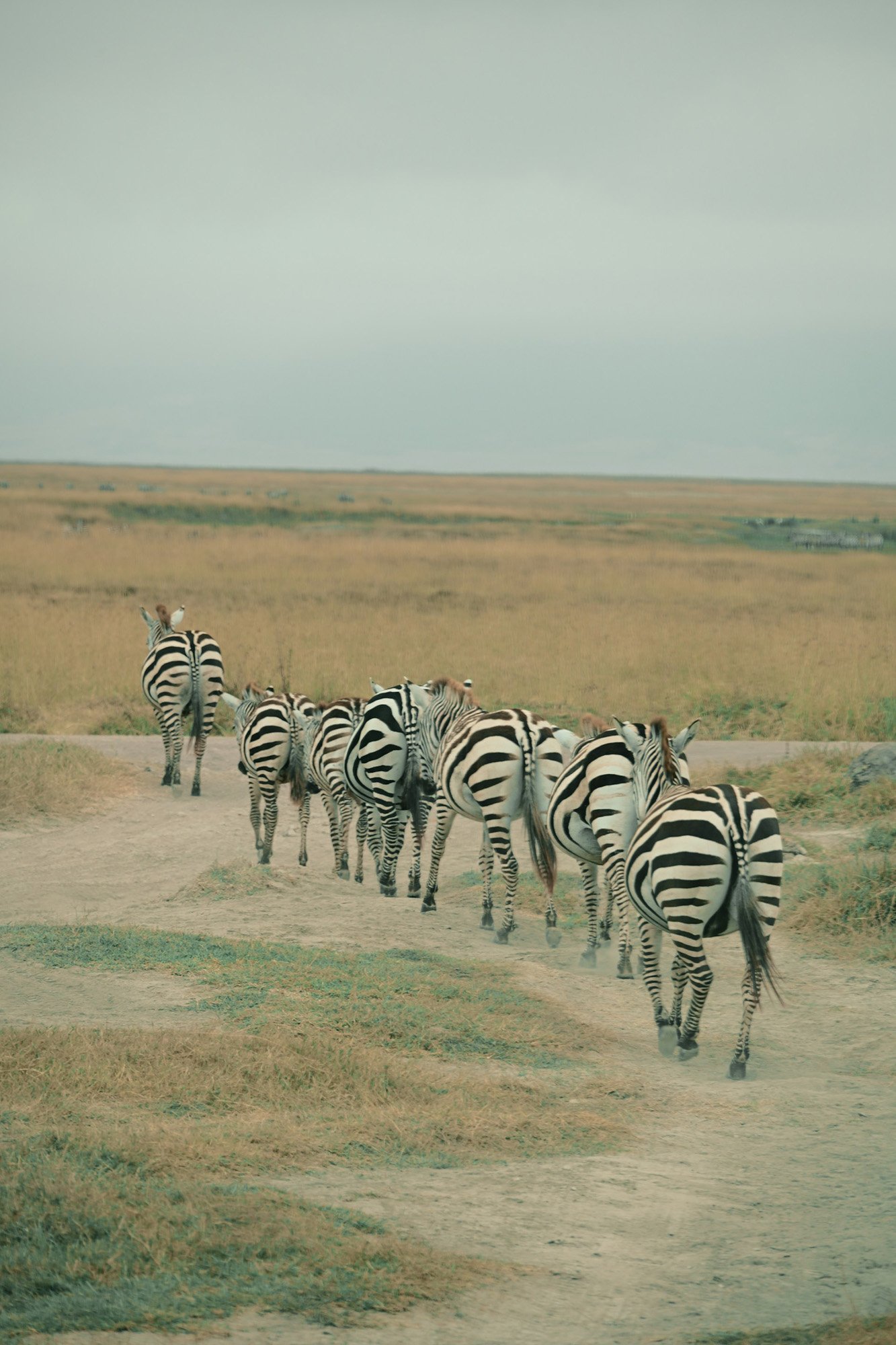
And we are right in the middle of it
Kwatale Collection lies in the corridor of the Okavango–Makgadikgadi migration, right between the Delta and the Pans. It is no coincidence that two zebras appear in our logo.
We have no river and no mokoros. What we do have is wide, dry country and waterholes where everything with a thirst comes together. Zebras need to drink too, no matter how far they have already travelled. One of these waterholes lies right in front of the camp. You can sit down and wait to see who steps out of the bush next.
What it looks like
Forget the image of a single wall of stripes. The zebras travel in family groups, some earlier, some weeks later. First you see a dark line on the horizon. It becomes a cloud of dust, and then the animals are in front of you: mares with their foals, and a stallion who never takes his eyes off his surroundings.
Where zebras travel, predators follow. Lions and hyenas know exactly where the herds are. When the zebras arrive, the whole land comes alive.
The land remembers
These migrations almost ceased to exist. In the 1960s, Botswana built veterinary fences to protect cattle from foot-and-mouth disease. The fences cut across routes that had existed for thousands of years. In the mid-2000s some of them were moved, and part of the herds took up the old routes again. Nobody had taught them. They still knew.
For researchers, this is more than a nice story. Herds that keep moving do not graze an area bare, so the land stays healthier than if the animals stayed in one place all year. How the migrations will affect zebra numbers in the long run is still unclear. But they already show that a landscape can recover when it is given its path back.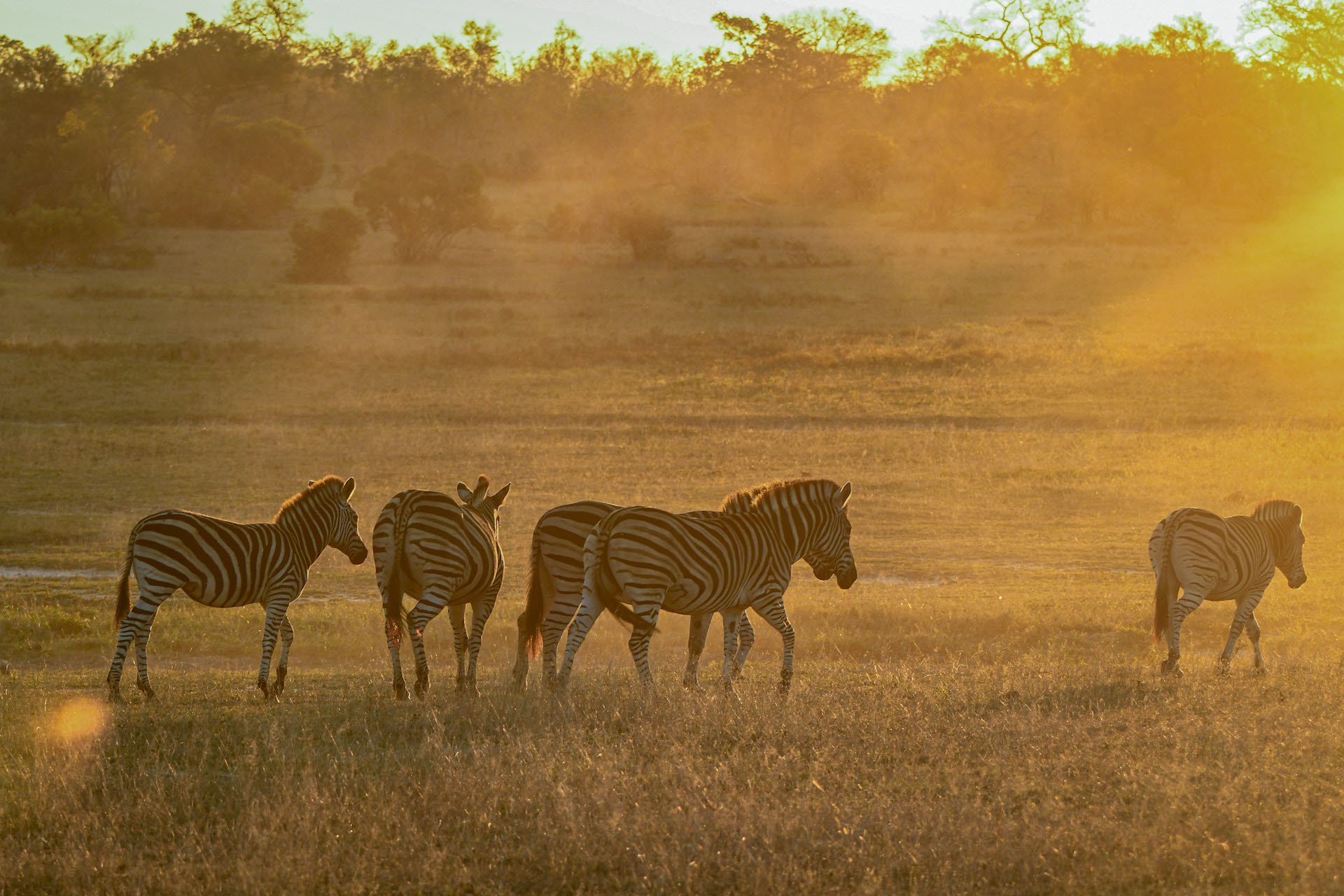
When to come
The zebras are usually on the move between December and March, which is the green season. We cannot promise you an exact date, because the rain does not follow a calendar. Our guides read the land and will tell you where the herds are.
This is the time when many other camps close. We open. The land glows lush green, there are young animals everywhere, and you share all of it with almost no one.
Would you like to see the zebras on their journey? Get in touch.
Further Reading
03 | What the land tells us
Fri September 4, 2026
Read This Article
About salty water, hidden paths – and the wildlife that shows us the way.
02 | What we plan to do with this land
Wed July 29, 2026
Read This Article
About the history of NG43 – and the path we have chosen to take.
Share This Post